
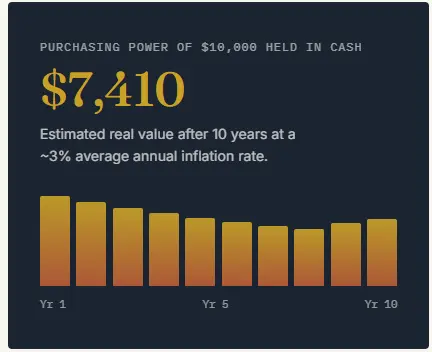
Un dollaro, se lasciato fermo oggi, vale meno di dieci anni fa, silenziosamente, anno dopo anno, che ve ne accorgiate o meno. Non si tratta di un'operazione di marketing. È la spiegazione matematica che dimostra perché "risparmiare" non è la stessa cosa di "stare al passo con i tempi".
La maggior parte delle persone tiene sotto controllo le proprie entrate, ma non il proprio potere d'acquisto. Questa pagina illustra la differenza, utilizzando prezzi reali e una guida in linguaggio semplice che puoi effettivamente utilizzare: niente tecnicismi, nessuna pressione, nessuno che ti chiami dopo.

Niente tecnicismi, niente chiamate di vendita, nessun "broker esperto" che vi contatta. Solo un breve PDF che spiega come viene calcolato il potere d'acquisto, da dove provengono i dati ufficiali e un semplice foglio di calcolo per confrontare le vostre cifre con il vostro budget.
La lettura richiede circa dieci minuti, mentre per completare il foglio di lavoro ne occorrono forse venti. Non c'è nessun prodotto aggiuntivo da vendere alla fine: solo i numeri, spiegati in modo sufficientemente chiaro da poterli mostrare anche a qualcun altro.
ESPLORA OGGI STESSO LE OPPORTUNITÀ DI TRADING
I prezzi non si muovono in linea retta, ma la direzione raramente si inverte. Ecco una stima approssimativa dell'andamento di un articolo di uso quotidiano nell'ultimo decennio: una cifra che non compare sull'estratto conto bancario, ma che si somma alla spesa al supermercato.
Nessuno di questi numeri è di per sé eclatante. Ed è proprio questo il punto: l'inflazione raramente si manifesta in modo evidente. Si presenta come un totale leggermente più alto alla cassa, una busta della spesa leggermente più piccola a parità di spesa, un aumento di stipendio che in qualche modo non sembra tale.
Se all'epoca aveste avuto 100.000 sterline in banca, oggi con quella somma avreste potuto acquistare beni per un valore di sole 80.000 sterline: si tratta di una perdita del 20% in termini di valore reale a causa dell'inflazione.
Ora, mentre i conti di risparmio bancari rendevano meno dell'1% di interesse all'anno, l'inflazione si aggirava in media intorno al 2,5-3%, il che significa che il vostro denaro perdeva silenziosamente valore anno dopo anno.
Ma ecco il vero punto cruciale: nello stesso decennio, l'indice Nasdaq 100 è cresciuto di quasi il 400%.
In altre parole, il denaro investito sul mercato non solo ha mantenuto il suo valore, ma si è quasi quintuplicato.
E mentre la maggior parte delle persone si fidava delle proprie banche per "tenere al sicuro i propri soldi", le banche e i trader professionisti utilizzavano proprio quei soldi per realizzare quei profitti per sé stessi.
Quindi, mentre i tuoi soldi dormono, qualcun altro li sta facendo fruttare, per sé.
È ora di prendere il controllo e far sì che i tuoi soldi lavorino per te.
Il potere d'acquisto non è un termine astratto dell'economia. Si manifesta direttamente nelle scelte quotidiane su come viene impiegato il denaro e su come ci si aspetta che venga utilizzato.
Si tratta di un'app di trading online creata appositamente per aiutarti a investire in asset finanziari legati al gas e all'energia. Utilizza strumenti e algoritmi automatizzati per valutare le tendenze di mercato e assistere gli utenti nel prendere decisioni di trading.
Sì, Gas Errtrag è un'app di trading adatta ai principianti, dotata di un'interfaccia semplice e contenuti didattici. Questo aiuta i principianti a imparare a prendere decisioni di trading più consapevoli. Le sue funzionalità sono progettate per aiutare i nuovi utenti a comprendere i concetti del trading e ad accrescere la loro fiducia nei mercati finanziari.
La piattaforma consente l'accesso a un'ampia varietà di asset finanziari. Gli utenti possono negoziare materie prime, metalli preziosi e azioni. Questa varietà permette loro di diversificare i propri investimenti in vari settori. Grazie a questa versatile app di investimento, possono esplorare numerose opportunità di trading.
La piattaforma utilizza protocolli di sicurezza rigorosi e protegge i dati degli utenti. Tuttavia, è comunque necessario utilizzarla con cautela. Il settore finanziario digitale comporta sempre dei rischi, pertanto si consiglia agli utenti di agire sempre in modo responsabile nelle decisioni di trading che prendono.
No, Gasertrag non garantisce profitti. La piattaforma dichiara esplicitamente che tutte le attività di trading comportano rischi sostanziali e che gli utenti potrebbero perdere il proprio investimento. Consiglia agli utenti di operare in modo responsabile e di investire solo denaro che possono permettersi di perdere.