
Um dólar parado hoje compra menos do que comprava há dez anos — silenciosamente, ano após ano, quer você perceba ou não. Isso não é uma propaganda. É a matemática por trás do porquê "economizar" não é o mesmo que "acompanhar o ritmo".
A maioria das pessoas acompanha de perto sua renda, mas não seu poder de compra. Esta página explica a diferença, usando preços comuns e um guia em linguagem simples que você pode realmente usar — sem jargões, sem pressão e sem ligações depois.

Sem jargões, sem ligações de vendas, sem "corretor especialista" entrando em contato. Apenas um breve PDF que explica como o poder de compra é calculado, de onde vêm os números oficiais e uma planilha simples para que você possa comparar seus próprios cálculos com o seu orçamento.
A leitura leva cerca de dez minutos e o preenchimento da planilha, talvez vinte. Não há nenhuma oferta adicional no final — apenas os números, explicados de forma tão clara que você poderia mostrá-los a outra pessoa.
EXPLORE AS OPORTUNIDADES DE NEGOCIAÇÃO HOJE
Os preços não se movem em linha reta, mas a direção raramente se inverte. Aqui está um esboço aproximado de um item do dia a dia ao longo da última década — o tipo de valor que não aparece no extrato bancário, mas que se acumula na conta do supermercado.
Nenhum desses números é dramático por si só. Esse é exatamente o ponto — a inflação raramente se anuncia. Ela aparece como um total ligeiramente maior no caixa, uma sacola de compras um pouco menor pelo mesmo valor, um aumento que, de alguma forma, não parece um aumento.
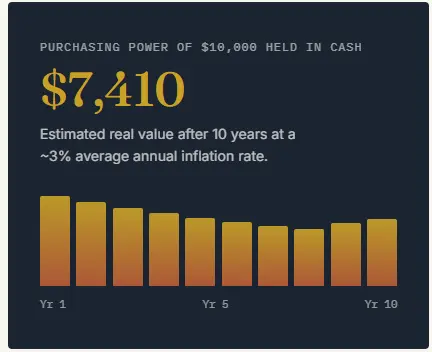
Se você tivesse £100.000 no banco naquela época, hoje só conseguiria comprar cerca de £80.000 em mercadorias — uma perda de 20% no valor real devido à inflação.
Naquela época, enquanto as contas de poupança bancárias rendiam menos de 1% de juros ao ano, a inflação girava em torno de 2,5% a 3%, o que significava que seu dinheiro estava perdendo valor silenciosamente ano após ano.
Mas eis a verdadeira surpresa: durante essa mesma década, o índice Nasdaq 100 cresceu quase 400%.
Em outras palavras, o dinheiro investido no mercado não apenas manteve seu valor — ele se multiplicou quase cinco vezes.
E enquanto a maioria das pessoas confiava em seus bancos para 'guardar seu dinheiro em segurança', os bancos e os operadores profissionais estavam usando esse mesmo dinheiro para obter esses retornos para si próprios.
Enquanto seu dinheiro está parado, alguém o está fazendo render — para si próprio.
Chegou a hora de assumir o controle e fazer seu dinheiro trabalhar para você.
O poder de compra não é um termo abstrato da economia. Ele se manifesta diretamente em escolhas cotidianas sobre onde o dinheiro é investido e o que se espera que ele faça.
É um aplicativo de negociação online desenvolvido especialmente para ajudar você a investir em ativos financeiros relacionados a gás e energia. Ele utiliza ferramentas e algoritmos automatizados para avaliar as tendências do mercado e auxiliar os usuários na tomada de decisões de negociação.
Sim, o Gas Errtrag é um aplicativo de negociação fácil de usar para iniciantes, com uma interface simples e conteúdo educativo. Isso ajuda os iniciantes a aprenderem como tomar decisões de negociação mais inteligentes. Seus recursos são projetados para ajudar os novos usuários a entender os conceitos de negociação e aumentar sua confiança nos mercados financeiros.
A plataforma permite o acesso a uma ampla variedade de ativos financeiros. Os usuários podem negociar commodities, metais preciosos e ações. Essa variedade ajuda os usuários a diversificar seus investimentos em vários setores. Eles podem explorar inúmeras oportunidades de negociação com a ajuda deste aplicativo de investimento versátil.
A plataforma utiliza protocolos de segurança robustos e protege os dados do usuário. No entanto, ainda assim, deve ser utilizada com cautela. O setor financeiro digital sempre envolve riscos, portanto, recomenda-se que os usuários sejam responsáveis pelas decisões de negociação que tomam.
Não, a Gasertrag não garante lucros. A plataforma declara claramente que todas as atividades de negociação envolvem riscos substanciais e que os usuários podem perder seu investimento. Ela aconselha os usuários a negociarem com responsabilidade e a investirem apenas dinheiro que possam se dar ao luxo de perder.